The Best Off The Beaten Path Travel Activities Around The World

The Best Off The Beaten Path Travel Activities Around The World

The Best Off The Beaten Path Travel Activities Around The World

According to 27 Travel Bloggers

This article may contain affiliate links. This means that if you make a purchase after clicking on the link, I may receive a small commission.

What happens when you survey 27 travel bloggers and ask them to name their favorite hidden travel gems? This ultimate list of off the beaten path travel destinations – that’s what happens!

My favorite part about traveling is when I go off the beaten track, which is why I collaborated with other bloggers to compile an epic list. Whether you like going to popular cities, like Barcelona, or countries with fewer tourists, like Pakistan, this off the beaten path travel guide shares secret destinations from all different types of places.

My goal for you is that by the end of this post, you will find a place you never heard of and are inspired to go there!

Warning: I know, “off the beaten path travel” is an overused phrase. By no means do I think going on off the beaten track holidays is the only way to be a “real traveler.” There’s nothing wrong about going to touristic destinations – there’s a reason they are popular!  Kesi To and Fro focuses on traveling to off the beaten track destinations so that readers can: 1) learn about new destinations, 2) increase tourism in certain countries like the Democratic Republic of Congo, and 3) spend money with unknown local tour operators!

Off The Beaten Path Africa

Africa! I hold this continent near and dear to my heart. Maybe it’s because I have ancestry here, or perhaps it’s because traveling East Africa has been my favorite backpacking experience. Nonetheless, I am happy to begin this off the beaten path travel list with the motherland.

Africa is famous for its diverse wildlife, Victoria Falls, Egyptian Pyramids, and more. People visit one country in Africa (most likely either South Africa, Egypt, or Morocco), and then tick the continent off their bucket list.  Africa has 54 countries! There is so much to explore. Don’t just come to the continent once and feel satisfied.  I strongly encourage everyone to visit the continent and to spend money there!

Without further ado, let’s dive into some off the beaten path destinations!

To find more off the beaten path travel destinations, I recommend purchasing guides from Lonely Planet, since they have sections dedicated to getting off the tourist trail. Buy a new travel book today from Lonely Planet!

Shipwrecks in Mauritania

Contributor: Tina Phillips | Team Hazard Rides Again

Mauritania is a true country of the Sahara. The desert infiltrates every city and village, ready to swallow it back up if humans ever decide to leave.

So how does a country like this end up with hundreds of shipwrecks?

Simple answer: Corruption

The previous government allowed corporations to dump their unwanted ships on Mauritania’s Atlantic shore near Nouadhibou, for a certain fee, of course.

This has created a unique opportunity. It’s very possible to go and view the rusted and disintegrating shipwrecks, getting pretty close. You’ll need a local guide that knows something about them. As there isn’t much tourist structure in Mauritania, you’ll do best just asking around. Start with your hotel/auberge.

Important Tip: Whether your guide mentions it, or not, insist on going at low tide – otherwise you’ll be viewing the shipwrecks from a distance.

Limited Time: The downside of the corruption and all those ships on the beach is that the deteriorating hulks have created an environmental mess. The current government is working on cleaning them up (we were there in November 2018), and it’s unknown how long the shipwrecks will remain, how many are left, or where they will be. Salvage crews can only work so fast, but if you have a desire to see them, make it soon.

 Why it’s Cool: Come on, how often do you get to see shipwrecks up close – no diving required? And if you love deconstruction, abandoned places or things falling apart, there’ nothing better.

 Getting There: If you’re coming overland from Western Sahara, Nouadhibou is a natural stop not too far from the border. If you’re flying in, you’ll be taking a 5-6 hour minivan ride from Nouakchott*. There are several bus companies to choose from, but Varess did right by us.

*Note: There are at least 7 security checkpoints between Nouakchott and Nouadhibou, so make sure you have enough photocopies of your passport, or travel fiches. Don’t worry about the checkpoints, they’re there for your protection.

Volcano Trek in Democratic Republic of Congo

Contributor: Kesi Irvin | Kesi To and Fro

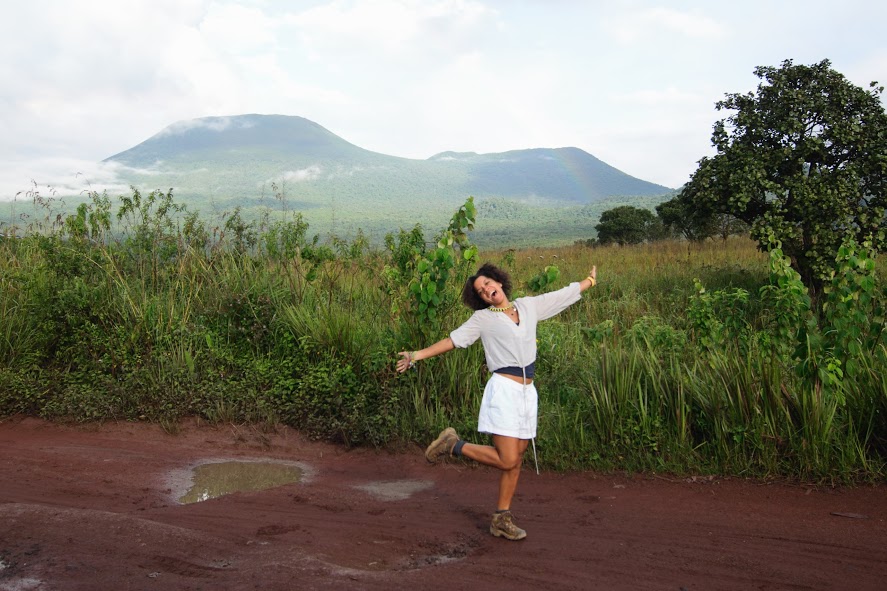
Have you ever seen a lava lake? It’s the coolest thing I’ve seen in nature. To witness the largest lava lake in the world, you have to go to a country most people fear – The Democratic Republic of Congo. Although this country suffers from internal conflict, adventurous travelers, who love finding hidden places in the world, must-visit. The Nyiragongo volcano trek is an overnight hike, with the best reward at the summit. This trek makes the DRC one of my favorite countries in Africa.

For more information, check my complete guide on the Nyiragongo volcano trek. Also, you should pair this volcano hike with congo gorilla trekking.

Maasai Village Visit in Tanzania

Contributor: Kesi Irvin | Kesi To and Fro

Secret places in the world to visit can be hard to find, but once you discover one, it makes the moment even more special. Visiting a Maasai village in the middle of nowhere in Tanzania is a highlight in my four years of traveling. This experience was culturally enlightening and completely immersive.

Many safari agencies in Tanzania add on a Maasai village tour to their packages. These tours often feel like a human zoo. To have an authentic Maasai village visit, I recommend contacting someone who lives in a Maasai village directly. I found a Maasai host, named Tobico, on the website Couchsurfing.com. Tobico offers the best off the beaten path tours. I highly recommend booking a homestay experience with Tobico and his family because it’s a chance to learn how the Maasai live. There are no fake shows put on to entertain tourists. It’s an experience where you get to see the everyday life of a Maasai, and an excellent opportunity to ask questions and learn from one another.

I wrote about my full experience, so click to read more about my Maasai village visit.


Golden Monkey Trek in Rwanda

Contributor: Wendy Lee | Empty Nesters Hit The Road

If planning to visit Rwanda, a golden monkey trek should be a part of anyone’s itinerary. In the Northwest of Rwanda, bordering the Democratic Republic of Congo, is the oldest conservation area in Africa, Volcanoes National Park. This park is best known for mountain gorilla trekking, but there’s also a rare species of primate located here that is well worth seeing, the golden monkey. The trek to these smaller animals is easier and far less expensive than that to the gorillas, making this a nice option for visitors looking for a less physical challenge or on budget. I had the opportunity earlier this year to see the golden monkeys and highly recommend the experience.

We met our guide in a small village outside the national park where he gave us an overview of the trek and what to expect. Then we walked at a leisurely pace for about thirty minutes into the park. Soon the trackers announced that they spotted the monkeys. As we wandered through a dense forest of bamboo, we began to see the monkeys. They are quick and agile and swung easily through the trees. Eventually, they moved to the nearby potato fields, which gave our group even better viewing.

We watched as dozens of golden monkeys played chase and wrestled, sometimes coming within inches of our legs. Baby monkeys clung to their mother’s backs, while the oldest ones simply sat in place nibbling bamboo leaves.

After an hour of viewing our guide asked us to begin the walk back to the village. While the monkeys are habituated and comfortable with humans, each group’s time is limited to minimize stress on the animals.

The cost of a golden monkey trekking permit is currently $100 and can be purchased online, or through a tour company. The minimum age to participate is 12. The total time of our trek was three hours, but the length can vary according to the weather and location of the monkeys.

Planning a honeymoon? There are beautiful, secluded honeymoon destinations in Africa. Click here to read my suggested African honeymoon spots

Off The Beaten Path Asia & Middle East

Plain of Jars in Laos

Contributor: Nikki & Michelle | Cheeky Passports

Laos is one of the more popular destinations in Southeast Asia, included on many backpacking trails, but few travelers make it to the curious and unique Plain of Jars, in the Xiangkhouang Province.

The mysterious massive stone jars, which lie scattered across the plains close to the town of Phonsavan, are thought to be relics from ancient funeral rites or burials, although there is still some mystery surrounding this.

You can visit several of the sites on which the jars are still standing (or lying), some whole and some half-broken, while others are hidden in the surrounding vegetation. For those traveling on a backpacker’s budget, getting to Phonsavan involves making the 8-hour bus journey from the popular Luang Prabang. You can also hop on a flight, which, however, tends to be rather pricey.

The Plain of Jars can be visited on tour or independently, most conveniently by renting a scooter from Phonsavan and driving to the three major sites which are not far off from town. There’s still some UXO (unexploded ordinance) around the area, so it is imperative to stay within the marked paths and routes when traveling around the zones and visiting the sites.

We recommend making the detour to Phonsavan to take a look at the mysterious stone jars, reminders of a past about which little is known!

Pygmy Elephant River Safari in Borneo

Contributor: James | Travel Collecting

 It’s not that easy to get to the Kinabatangan River in Sabah, in Malaysian Borneo, but you’ll be well-rewarded for your efforts. The main airport in Sabah is Kota Kinabalu, but you will need to go deeper into Borneo to the smaller airport of Sandakan. From there, you will transfer to a small speedboat, in which you will cross a large bay before turning and heading up the Kinabatangan River.

The river is a deep brown and slow moving, heavy with silt. Surrounded by jungle on both sides, it really feels like you are trekking deep into the heart of Borneo. A rain squall drenched us; we were dry minutes later. Three hours upriver, there are several lodges accessible by boat only. The lodges arrange daily trips on the river in small boats with an expert guide who is skilled at spotting wildlife.

Early morning and late afternoon are prime times for spying animals like proboscis monkeys, macaques, and hornbills.  However, if you want a chance at seeing pygmy elephants, you’ll need to head further upriver. Pygmy elephants are the smallest elephants in the world and are indigenous to Borneo and a few parts of Sumatra. They migrate throughout the year, and in May they can often be found in the late afternoon coming down to the Kinabatangan River’s banks to drink and eat. Seeing them is an incredible experience, and one of the most off the beaten track destinations. 

Hai Van Pass in Vietnam

Contributor: Darja|DeeGees Travel

Often getting out of your comfort zone, just a little bit is what it takes to experience something more unique. Driving a scooter in Southeast Asia may require some skills, a lot of focus and a ton of bravery (at least in the beginning), but the opportunities you unveil as a result are worth the challenge. One of those is renting a bike and crossing the gorgeous Hai Van Pass between Da Nang (or Hoi An) and Hue, Vietnam.

The mountain road goes along the coast and offers spectacular views of Da Nang Bay and Son Tra peninsula. Once there, you understand why many consider Hai Van Pass one of the most scenic passes not only in Vietnam but also in the entire world. The natural beauty is simply breath-taking!

The reason why this “Ocean Cloud Pass” is not as popular as one would expect is the driving difficulty. Although the road itself is in excellent condition, drivers must pay extra attention due to sharp turns and reduced visibility — however, no need to worry. If you stay focused and drive slowly, you will be fine. It is worth it!

You can start your trip from either city, but make sure you leave early in the morning to make your Hai Van Pass crossing a whole day trip. On the way you can do a little hike in the Bach Ma National Park, swim in the Elephant Springs and have a delicious fresh seafood lunch at the picturesque Lang Co beach. The whole trip, including the aforementioned stops, requires 4-5 hours of driving. Don’t forget your sunscreen and a long-sleeve jacket for the pass!

Green Oasis in Dubai

Contributor: Mar Pages | Once In A Lifetime Journey

Al Ain is about 75min drive from Dubai, and it was the first UNESCO listed site in the whole of the UAE. The site consists of a fort, Bronze Age archaeological remains as well as a working oasis made up of thousands of palm trees that can be explored on foot or on a bike.

Most people think of the UAE, and of Dubai in particular, as a glitzy and new place, and it mostly is, but the Al Ain oasis, part of Abu Dhabi, is a refreshingly green escape from the otherwise deserted Emirates. While visiting, it can be completely empty – I only saw a family and another tourist during the two hours that I spent there.

As soon as you get to the oasis gates, you will get a map showing the paths inside the oasis and a couple of other sites within the complex. There is a museum that talks about the history of the oasis and of Al Ain and then a fort that can be visited. The oasis is a working farm where dates and palm trees are farmed. There are paved paths that can be explored on foot or you can rent bikes for four or six people to pedal around the plantation. This is one of the most unique things to do around Dubai and makes for a great day excursion.

Al Ain is also where the Ruler of Abu Dhabi grew up and where you can find the largest percentage of Emiratis among the residents, although they are still outnumbered by expats. After the oasis, you can explore the city and the fort where the Ruler grew up.

Riding the Karakoram Highway in Pakistan

Contributor: Marco Ferrarese | Monkey Rock World

Few trips are both more scenic and safe than riding a motorbike on the Karakoram Highway in North Pakistan. The highest motorable road in the world, the Karakoram Highway is 1300km long and connects Pakistan’s capital Islamabad with Kashgar in Xinjiang Province, China.

Because of red tape regarding traveling with your own vehicle in China, it’s best to stick to the Pakistani side, which also offers the best scenery. Beside the Khunjerab Pass (the highest border crossing in the world, separating the two countries), other highlights along this route are the Passu Cones — huge rock formations that look like a dragon’s fangs jutting out of high altitude desert — and the Hunza Valley, encased by a series of 7000-odd-meters-high peaks, including stunning Rakaposhi and Nanga Parbat. You can see them all from the top of Eagle’s Nest, the highest hotel in the valley scenically set above Karimabad and its two UNESCO-listed forts, Altit and Baltit.

You can easily strike off by yourself from Gilgit, the main center of the Gilgit-Baltistan region, where it’s possible to find traveler-oriented accommodation and rent motorbikes. Karakoram Bikers is a very recommended Australian-Pakistan tour operator. Getting visas to Pakistan has also become more accessible since 2019 when a new e-visa system became operational. And with a security situation that has largely improved, you have no more excuses not to go.

Arasan Baths in Almaty, Kazakhstan

Contributor: Ellis Veen | Backpack Adventures

Almaty in Kazakhstan is already an off the beaten track travel destination in Asia, but since visa regulations have eased, it is quickly becoming a new center for outdoor activities. With the Tien Shan mountains at your doorstep that is no surprise.

One of my favorite things to do in Almaty, besides nature, is a visit to the old Soviet spa. The Arasan Baths are the perfect place to relax your muscles after a hard trek or to simply unwind and recharge your battery. In cold winters and on rainy days there is no better place to be in Almaty.

A soviet spa is probably quite different from what you are used to at home. It might be more basic and don’t expect anything fancy, but it does the trick just as well. Based on Russian bathing rituals, the spa consists of several sauna’s and pools that you can use.

At the Arasan baths, you can also get a massage or get yourself a beating with the oak leaves as the locals do. Apparently, it helps to circulate the blood. After two hours of heating up in the sauna and cooling down in one of the pools, you will feel as new.

 Take some time to appreciate the architecture of the building as well. It was built in Soviet times and is one of the largest bathhouses in central Asia. Saunas are quite common in Almaty, but Arasan baths is one of the most iconic in the city. It is recommended to bring your own towel, slippers, and shampoo, although in the worst case you can buy or rent those at the entrance as well.

Off The Beaten Path Central & South America

Craters in Guanajuato, Mexico

Contributor: Natalie | Blissmersion

Las Siete Luminarias (or the 7 Luminaries) are a series of seven craters within a 56-mile radius in the state of Guanajuato, Mexico. My research says there are actually sixteen craters, but only seven are famous. Of those seven, only one is really set up for some tourism: Rincón de Parangueo. This difficult to find crater is worth including in your Guanajuato itinerary. Once you find it, you can pay to park in someone’s driveway and walk to the tunnel (look for the Las Siete Luminarias signs). Bring a flashlight or make sure your phone battery is fully charged. The tunnel into the crater doesn’t have any lighting and it’s fairly long.

This crater was once a volcano. It’s massive, deceptively so. Once you’re through the tunnel, you come to a clearing and there are some food stalls set up. From there, you can climb down into the ashy white crater interior. It isn’t too difficult and most fitness levels will be able to climb down and back up the crater walls without any issues.

Once inside Rincón de Parangueo, it feels like you’re on a different planet. The ground is reminiscent of dry, white, flaky mud. There is a body of water inside the crater and the water is pinkish around the edges. Be careful, the mud will try to claim the shoes of any who get too close.

The crater is one of those places that quietly steals your heart when you visit. It’s magical and it isn’t overrun with tourists. It’s also a far different landscape than you’ll find anywhere in Mexico.

Sierra Negra Volcano in Galapagos

Contributor: Fiona from Passport and Piano | Travel Beyond the Ordinary

There are 13 main islands in the Galapagos, and everyone except Isabella was formed from a single volcano. Isabella was created from 6 volcanos, several of which are still active today.

Sierra Negra is one of these active volcanos and the only one that you can climb on the island. The hike can only be taken with a National Park guide, and a reasonable level of fitness is required. The 16km round trip takes approximately 6 hours to complete, and you can expect to see some spectacular scenery along the way. The climate also changes at various levels from damp and humid in the lower section to dry and warm nearer the top. 

The first section is a steep climb, and the path is both rocky and slippery, so a good pair of hiking boots is essential. However, you’re rewarded with a fantastic view of the crater after approximately 5km. 

 The volcano last erupted in 2005, and the next section of the walk takes you through where the lava flowed. The ground here is hard to negotiate as it’s not flat and the mineral soil crumbles under your foot, so it’s easy to slip.

In this section, there’s two distinct trails of rock, a red one from the eruption in 2005 and one which is entirely black from the lava flows of 1979. On the black side, an occasional fern is now growing, but the landscape feels ultimately baron, and you feel like you’re on another planet. 

From here there’s one final climb to reach the top. The view is impressive, and it’s surreal to think you’re standing above a volcanic crater that’s still active below.

Wine Tasting in Bolivia

Contributor: Sarah Carter | A Social Nomad

It’s not the first place that springs to mind when you think of wine tasting, but there are some seriously interesting wines to taste in Bolivia. These include a couple of vineyards and wineries that almost make you feel as though you’re in Napa Valley, California!

You’ll find the majority of the wine region in Bolivia centered about the town of Tarija – famous also for its connections to Butch Cassidey and the Sundance Kid. (they died near here). The town is also very close to the Argentinean border and as such sports a rather spectacular steak house.

The Bolivian palate prefers a sweet wine, regardless of whether its red or white and the many hundreds of mom and pop style wineries cater extensively for this. However, it’s the wineries of Aranjuez and Kohlberg that are quite stunning in their range of wines – incredible tannats, merlots, and a superb Syrah.

This isn’t a place where you can just hop on a local bus or rent a bike and make your own way around wineries, but wine tours are cheap and plentiful, pretty much like the wine! A tour of 3 wineries with associated tastings run to 100 Bolivianos ($15 USD). Tours leave the main square in Tarija mornings and afternoons.


Death Road in La Paz, Bolivia

Contributor: Julie Sand | Why Not Ju

About 2 hours outside the capital of Bolivia, La Paz lies Death Road, also going by the name Camino de la Muerte. Does the name sound thrilling to you? It’s definitely worth a visit. Not only can you visit Death Road, but you can also ride down 52 km of it, on a bike. Yungas Road is the official name of the road. It stretches from La Paz to Coroico in the north and Chulumani in the south. The road was made in the 1930s by Paraguayans kept prisoners during the Chaco War. The finished death road is over 100 km long, with winding paths along cliffs surrounded by beautiful landscapes. It’s said that it’s one of the most dangerous roads in the world with an estimated 200-300 deaths each year.

These days though, the road isn’t as frequented as before, and it’s closed off for normal traffic. There are new, safer roads constructed replacing them. If you ever consider visiting Bolivia, don’t miss out of this experience of a lifetime. The price of biking down death road ranges from 50-120 dollars depending on the company and bike you choose. You get picked up in La Paz in the morning, get your gear and drive to the start point for your ride at 4,650 meters above the ocean. You don’t have to do a lot of pedaling during the day as you end up in Corico as 1,200 meters above the ocean. In addition to being a thrilling ride, you get to hear stories about the road, enjoy the views and experience the climate change as you ride down the road.

Getting to San Cipriano via Las Brujitas in Colombia

Contributor: Daniel James | Layer Culture

When looking for off the beaten path travel activities around the world, make sure Colombia is on your list. One thing to do that will ensure you’re off the regular tourist trail, is to head out to San Cipriano – a natural reserve which is home to various nature walks and leisure activities. However, to be able to arrive at San Cipriano you must take an unexpected ride on an adapted mode of transportation. The name in Spanish is Las Brujitas. This is the name given to the motorbike equipped with a make-shift wooden carriage that cruises along an abandoned train track through the jungle.

Not only are ‘Las Brujitas’ the most effective mode of transport. They will give you the most exhilarating 20 minutes you’ll have taken and the ride costs less than $3USD. It’s worth noting that there’s not much space on the Brujitas so avoid carrying too much. Carrying any type of personal item bag that can hold a few essentials will be sufficient. There are no seatbelts or harness on these adapted vehicles, so be sure to hold on tight and don’t let go. When you get to the other side, you’ll arrive at the San Cipriano Natural reserve. From there, you’ll be met by a river where you can find some of the most crystalline waters in the world.

Cabuya Cemetery in Costa Rica

Contributor: Sarah McArthur | Costa Rica Vibes

In the tiny town of Cabuya in Costa Rica, near Montezuma, there is a cemetery located on an “island.” I say it this way because you are actually able to walk out to the cemetery during low tide. 

I visited this cemetery with my husband on the day after Tropical Storm Nate hit Costa Rica. When we arrived, I worried that we had interrupted a funeral. About 20 people were standing on the land next to the path to the cemetery. All of them had worried looks on their faces as they stared out at the ocean. 

The cemetery was filled with creative gravestones including full sculptures of people’s heads. After about thirty minutes of exploring, we headed back to our car. The whole village was still standing there looking out at the ocean as we left.

Typically you will not have such a melancholy experience at this cemetery. From pictures, it looks very beautiful during the day. There is a reef next to the cemetery that is supposed to be an amazing snorkel spot as well.

If you opt to visit watch out for the tides. You need to get out here just before the lowest tide and get back to your car before the tide comes in again. Otherwise, you will be stuck out on the island until the next low tide. 

Sacred Valley Hike Outside of Cusco, Peru

Contributor: Tales From The Lens 

Cusco and its region attract more than 3.5 million visitors per year which makes it hard to do something without being surrounded by tour buses and the crowds that go with it. As Machu Picchu and the many treks such as the Inca Trail and Salkantay draw lines of hikers daily, the towns of Ollantaytambo and Urubamba have become popular stops to acclimatise to the high altitude prior the hikes or to rest in luxury resorts. 

 If you head this way, make sure to also visit the nearby sites of Maras Salt Mines and Moray. While the first one is still in use by local families who collect salt from colorful ponds, the second is an archaeological site of 4 stair-like terraces dug in the Earth that once were used as an agricultural laboratory by the Incas to study conditions of crops growth!

Most tourists who visit these places join day-tours from Cusco, but few know about the possibility to hike and discover the breathtaking Peruvian countryside offering unique sights of the Andean cordillera. Hiking the Sacred Valley of the Incas can take a day or two depending on the itinerary chosen. We recommend allowing a couple of days from Media Luna to Moray via the village of Maras where you can stay overnight. Fortunately for off the beaten path travel seekers, there aren’t many companies offering guided hikes between Maras and Moray, which makes the adventure a truly unique experience far from the tourist hustle and bustle of the Cusco region

 To read more about how to hike between Maras and Moray without a guide, check Tales From The Lens’ self-guided itinerary.

Off The Beaten Path Europe

Cycling Around Girona by Barcelona, Spain

Contributor: Clare Dewey | Epic Road Rides

Girona is a stunning city, about an hour north of Barcelona in Spain. The reason it’s so popular is that it’s got a fantastically well preserved medieval old town full of winding alleyways, cobbled squares and towering architectural masterpieces, such as the cathedral that played a central role in Cersei’s walk of shame in Season 6 of Game of Thrones!

 Most people that visit Girona walk around the old town and then go home.

What we love to do is to get up early and hire a bike from one of the top quality road bike shops in the old town. Then, as the city is only just waking up, we weave our way through Girona’s streets and out into the countryside. Not only do you feel like a local as you ride through the city streets in the quiet of the early morning, but you also get some beautiful perspectives of the city that you might not get if you were on two feet. A bike can take you much further much more quickly, so you see things you’d never get around to if you were just walking.

Once out of the city, exploring by bike opens up a whole host of opportunities to get off the beaten trail. You can head inland and find famous hills to test yourself (like the notorious Rocacorba or Mare de Deu del Mont) or you could head out to the coast and ride the incredible coast road past tiny craggy coves and golden beaches.

Cycling in and around Girona is quite simply the best way to see this well-known city and the countryside around it.

Abandoned Hotels Near Dubrovnik, Croatia

Contributor: Katalin Waga | Our Life Our Travel

When you hear about Dubrovnik, probably the beautiful Croatian seaside, the iconic Old town and the popular TV series, Game of Thrones, come to your mind first. Not many know only 10 kilometers from the city, there is a small town, Kupari, which has a very different face: a spectacular bay filled with abandoned hotels.

The area used to serve as a holiday resort for the Yugoslavian Army. During the war, a few bombs hit several of the buildings, and they never been restored afterward. They are left to decay slowly until a new investor comes and takes advantage of this spectacular and secluded bay.

You can walk among the hotels and restaurant, check the garden, and with proper precautions also peek inside and explore these once upon a time prestigious places. Compared to many abandoned buildings, these are in decent shape and worth exploring. We met with several tourists taking photos and locals walking their dogs along the shore.

If you travel to Dubrovnik and are interested in abandoned places, make sure you check them out. Their future is uncertain, so better hurry.

Exploring the Narrow Vicoli in Naples, Italy

Contributor: Danila Caputo | Travelling Dany

Naples, in the South of Italy, is one of those cities that people tend to only use as a base to go to the Amalfi Coast or to Pompeii. If you are planning to visit Italy, add a few more days to your itinerary to explore the narrow vicoli in Napoli: you won’t regret it!

As locals, we’re used to the scent of food, but people who visit Naples for the first time always wonder why the vicoli always make you hungry. The reason is very simple: they are very narrow, enclosed among tall buildings, so when someone cooks, the scent will spread throughout the vicoli.

The oldest part of Naples, in the Decumani area, is full of narrow vicoli which hide delicious treats. Pizzerias selling Pizza Margherita for 1.50€ (the lowest price you’ll find in Italy), old men roasting chestnuts, and even tiny shops selling homemade bread bowls filled with Neapolitan meatballs and ragu sauce: to die for!

 The vicoli in Naples are where you can see how the locals used to live: nothing has really changed in ages. Our city is still a place where people share so much: you either love or hate Naples, there’s no in-between. Bonds between neighbors are very strong when you live in the vicoli, so close to someone else, and wherever you go, you’ll hear people laughing, chatting, or even hanging the laundry outside, on ropes tied from one balcony to the other.

What if you get lost? While not every Neapolitan speaks English, we’re always very happy to help the tourists, so don’t ever be afraid to ask for help. We’ll find a way to show you to the closest subway station: always with a smile, of course!

Dalkey and Killiney Hill in Dublin, Ireland

Contributor: Dr. J | Sidewalk Safari

Dublin, Ireland is famous and very popular with tourists. It is possible to get off the beaten track though if you know where to look. Take the local DART train from Dublin City Centre to Dalkey for a relaxing day out. Home to U2’s Bono and frequented by A-list actors like Pierce Brosnan, Dalkey is easy to love. Stroll through Dalkey Village stopping for a bite to eat or a cup of coffee at cozy places like the Corner Note Cafe. The most memorable and fun thing to do in Dalkey is pay a visit to Dalkey Castle and Heritage Center (9.95 EUR per adult). Hammy actors in period garb lead the tours and point out features like the ‘murder hole’ and the medieval toilet. The different characters recount the history of Dalkey Castle from different perspectives. The actors really turn what could be a boring house tour into an afternoon of entertainment. If you are more outdoorsy, take a hike featuring stunning sea views from Sorrento Park up toward Killiney Hill (about a 45-minute walk on paved trails). An obelisk marks the apex where you’ll enjoy 360-degree panoramas. Stop for a pint of Irish Craft Beer at the Magpie Inn in Dalkey or go for a more traditional Irish pub experience at Finnegan’s of Dalkey to round out your off the beaten path travel adventure in Dublin.

Abandoned Children’s Hospital in Berlin

Contributor: Sander Van Den Broecke

I visited an abandoned children’s hospital in Berlin when I was traveling solo in February 2019. When I was researching what I was going to visit on this trip, I came across an article about an abandoned children’s hospital called Kinderkrankenhaus Weißensee. Today, the hospital has turned into a place where street art and graffiti are present all over the area. Naturally, with my adventurer genes, I wanted to see this place for myself.

And so, when I was in Berlin, I took the tram from my hostel in the city center to the outskirts, where the building was located. The trouble started when I needed to find a way in. The main entrance had been blocked off by wooden plates, so I had to go around back and climb over an iron fence. I ripped my jeans on this fence when I was leaving, by the way.

When I took the first step inside the hospital building, I was immediately in awe at the contrast between the modern graffiti art and the decaying building it was sprayed on. Plants were growing through the cracks in the floor, and everything looked like it was ready to collapse.

Strictly speaking, I don’t think it was 100% legal to enter this building, but nobody stopped me, and I didn’t get into any trouble.

If you ever get the chance to visit Weißensee, I highly recommend you do so. But if you do: be careful when you’re visiting, because everything you do here has the potential to have disastrous consequences. Don’t tell me I didn’t warn you.

The Hill of Witches in Lithuania

Contributor: Dagney | Cultura Obscura

As soon as I read about the Hill of Witches, I knew I wanted to visit. This interactive outdoor sculpture park is located on the Curonian Spit, just off the coast of mainland Lithuania. It is home to approximately 80 wooden sculptures, all of which depict figures in Lithuanian folklore and legends, including demons and, of course, the eponymous witches.

However, the most frequently depicted folk hero is Neringa. She is a giantess who protected Lithuanian from a raging storm by transporting sand in her dress and piling it against the coast, eventually forming the Curonian Spit.

You are beckoned into the park by a wooden carving of a witch pointing visitors up a hill leading into the forest. Once inside, you are greeted by playful wooden statues, many of which can be climbed or sat upon.

As you walk through the park, it shifts from cheerful figures to more sinister ones. The reason is that the Hill of Witches is divided into two halves: Light and Dark. In the Light section lives Neringa and other Lithuanian folk heroes such as Egle the Queen of Grass-snakes and Laumė.

In the Dark section, are creepy demons and witches. There is even a sculpture of Lucifer standing before the Gate to Hell.

The Hill of Witches is an easy hike, but makes for a wonderful afternoon activity as you can interact with the sculptures, enjoy the forest and even picnic with folk heroes!

Entrance to the park is free, and it is open year-round. 

Truffle Hunting in Bologna, Italy

Contributor: Amber Hoffman | Bologna Living

In Europe, truffles are found by following truffle dogs as they hunt for the delicacy. In the area around Bologna, truffle hunters use dogs which can recognize the smell of truffles underneath the surface dirt. The best place to experience truffle hunting is in the tiny town of Savigno, the Città del Tartufo or City of Truffles, just outside of Bologna. Truffle hunting experiences generally leave from Savigno. The truffle hunter will take you into the moist and dense forest in the nearby countryside. The key to truffle hunting success is a well-trained dog and a good relationship between the truffle-hunting dog and the truffle hunter, or, tartufaio. The dogs are rewarded for good behavior when they find a truffle. For this reason, dogs are trained to dig into the ground wherever they sense an odor, and they willingly exchange their truffle-treasure for a piece of bread and a pat on the head. Not a bad trade for the truffle hunter! During a day of truffle hunting, it’s possible to experience the exchange between a real tartufaio and his dog, which is an incredibly special sight. It is only after you’ve spent a few hours in a forest chasing a dog around that you can truly appreciate why truffles are as expensive as they are. There are tour companies that can arrange a truffle hunting tour to follow a truffle hunter and his dog for a few hours, generally accompanied by lunch at a local agriturismo in the Bologna Hills.

Underground Theme Park in Romania

Contributor: Daniel Arreola| Pro Blorger

Located just 30 minutes from Cluj-Napoca (Romania’s 2nd biggest city), is Salina Turda: The underground amusement park. Salina Turda was converted from a decommissioned salt mine. It’s an amazing journey going many levels underground to see such a sight.

On the way down to the underground amusement park, you’ll pass through exhibits of the old salt-mining equipment. The salt was extracted by hand with pickaxes and carts. The chunks of salt are massive!

It’s pretty moist cold on the way underground. You’ll definitely be hit by drops of saltwater along the way. Bring a jacket and expect it to get a little dirty.

Once you make it to the amusement park, you’ll find a Ferris wheel, mini-golf, billiards, bowling, table tennis, a sports field, and an amphitheater! At one level below that, there’s a small lake where you can rent boats and row around.

Best of all, it’s the cheapest underground amusement park you could visit at only 30RON ($7.50 USD). The prices for the activities are also very affordable and range from $1-3 USD.

Not only can you spend a few hours having fun here, but there are also health benefits from breathing salty air. Since salt is a natural disinfectant, the dry salty air helps respiratory conditions.

Additionally, they have a pool and health spa (nearby, not underground).

Dwarf Hunting in Wroclaw, Poland

Contributor: Karolina Klesta | Lazy Travel Blog

Dwarf hunting in Wroclaw is an activity that you should put on your bucket list. Whether you are planning a trip with your friends or your family, one of your things to do in Wroclaw should be breaking the record in finding the highest number of dwarfs as you walk around the beautiful city. That is if you are not distracted by the exquisite architecture that fills Wroclaw. 

Of course, these aren’t real gnomes. Rather, these are sculptures made by the citizens of Wroclaw as a protest against communism when they were still under Russian rule. The dwarfs come in all shapes and sizes. From classical bakers and friars to more modern versions that include a dwarf on a skateboard and a rocker dwarf decked in leather jacket and t-shirt. Head to the Tourist Information Centre to get a map or rise to the challenge and find as many dwarves as you can in 2 hours by booking with Get Your Guide and meeting your guide at the Aleksander Fredro Monument.

Not far from more popular destinations like Krakow and Warsaw, it will take around 3 to 3.5 hours from either location by bus, train, or car. A train ride, however, would be far more comfortable than a cramped bus if you 12USD.

Off The Beaten Path Oceania

Hunting for Trace Fossils in Kalbarri, Western Australia

Contributor:

Contributor: Suzanne Jones | Keeping Up With Little Joneses 

A family hiking and outdoor adventure blog focussed on teaching through experiences, conservation and enjoying natural wonders Mother Nature has to offer.

Kalbarri National Park in Western Australia is best known for its spectacular red sandstone gorges and dramatic coastal cliffs towering over the Indian Ocean. Hiking along one of the many trails will take you past rock pools, wildflowers, and the occasional emu.

However, the most fascinating feature of this national park is one that most visitors fail to notice. If you look down at the exposed rock you are walking on, you may just spot two parallel sets of impressions resembling tyre tracks in the mud. These faint and unassuming marks are thought to be the footprints of ancient creatures called Eurypterids. Just over 400 million years ago, these scorpion-like animals were probably the first life to crawl out of the oceans and on to dry land. This marked a pivotal point in the evolution of life on our planet. At this time, not even plant life had established itself in the land.

You can place your fingers in these fossil footprints knowing you are tracing the steps of one of the most critical events in Earth’s history, yet most people wander by unaware.

You can read more about their Fossil Hunting expedition in Kalbarri National Park on their website.

Sepik River in Papua New Guinea

Contributor: Patricia | Ze Wandering Frogs

The Sepik River in PNG is home to a rich culture featuring incredible woodwork, traditional performances, and village life that has changed little over the centuries. The Sepik River takes you through the extraordinary traditions like kids playing and women washing in the river, fishermen on their dugout canoes, colorful dances at the beats of the drums, and men carving masks, 

The best way to approach the Sepik River is to reach Wewak first before heading to Pagwi along the river. Traveling in the river is done by canoes, passing by the villages. Each village is home to different dances, from the Crocodile dance, the Cassowary dance, and the Mask dance. Each performance unique, with stunning costumes. 

While it’s challenging to travel to the Sepik River, the welcome, the traditions, and the history are worth every second. And because it’s challenging, very few people go there, which is why PNG is still one of the best off the beaten path vacations. Do avoid the rainy season as villages will be under muddy water for a while. And bring enough repellant as mosquitoes are numerous and fierce.  

  Off The Beaten Path Travel Conclusion

Whoa! That is one comprehensive list of cool activities!  Off the beaten path travel is fun because it’s a chance to discover a place that not many know about. You can come back home and talk about this unique experience. I hope this list comprised by fellow travel bloggers inspires you to go off and explore and made you realize there are many things to find off the tourist trail.

Now that you have gone through this epic list, which is your favorite hidden gem? Travel is amazing! Leave a comment to let me know which activity interests you the most!

Are you interested in learning about more off the beaten path travel destinations? I recommend purchasing a Lonely Planet guidebook because they always add a section about activities off the tourist track.

Click here to buy a book from Lonely Planet.

Pin this post to reference later!
What You Should Know About a Maasai Village Visit

What You Should Know About a Maasai Village Visit

What You Should Know About a Maasai Village Visit

Zanzibar. The Serengeti. Mount Kilimanjaro. These are the first things that come to mind when I hear Tanzania. All of these are extraordinary experiences, yet when I arrived, I sought to find the most unique places to visit in Tanzania. I turned to Google and typed “cultural tourist attractions in Tanzania,” but still didn’t find anything that stood out. Then suddenly I received a text from my friend Martha:

“Kesi! Just met this girl, Ebone, at Soho House that you would love. She was just in Tanzania, and I’m giving you her number so you can get all the recommendations from her.”

Jackpot! (The best travel suggestions always come from friends.) I messaged this mystery woman, and will be forever grateful! She introduced me to one of the most culturally immersive experiences I’ve ever had–an authentic Maasai village visit. And yes – I am talking about a real authentic Maasai village visit rather than one that tour companies promote.

A Maasai Village Visit Does Not Have To Be a People Museum

Every guide around Arusha offers the option to add a Maasai tour to a safari package. Maasai tourism is popular, and I understand the desire to visit a distinctive group of people and learn about Maasai traditions. Yet I’m always hesitant to go on an organized tour to visit a tribal village because I don’t want it to feel like a human zoo.

On my blog, I strive to share experiences that are authentic and as local as possible. Visiting an African tribe for a couple of hours to witness a choreographed show or watch staged Maasai rituals purely to entertain tourists is too contrived for my liking. I don’t judge individuals who support Maasai tours if it is bringing money to the Maasai communities, yet I prefer a different style of traveling.

But alas – There is a way to have an authentic Maasai village visit!

Contact Details: If you are looking for a completely immersive Maasai experience, and would like to support a family directly, then I highly recommend contacting Tobico to arrange a homestay in his village outside Arusha. You can find more information on his Facebook Page

Maasai Homestay Quick Facts


Location: Loiborsoit, Tanzania

Days Needed: 2 to 3

Estimated Cost:  $40 USD 

Value: 10/10: Off the beaten path and authentic cultural exchange


Who Are These Maasai People?

The Maasai Tribe is one of the most well known in Africa since many African brochures feature them, and Maasai Tribe clothing is distinctive. Nonetheless, if you asked me to list Maasai Tribe facts, I would be at a loss. Heck – if you asked me “Where do the Maasai live” I would’ve failed. I ignorantly assumed they all lived in Kenya and had no idea the tribe extended into Tanzania. But once I landed in Tanzania, it became apparent that the Maasai Tribe culture permeates throughout the country.

False First Impressions: Meeting “Fake” Maasai in Zanzibar

While in Zanzibar, there were tons of men dressed in Maasai clothing. I thought it was pretty cool that there were so many Maasai people, until I discovered that most of these men were “fake” Maasai. There are several theories on why people dress up like Maasai:

1) To take advantage of tourists – You’ll find many fakes on the Zanzibar beaches who share false Maasai warrior stories of fighting lions, but in reality, they just want to get your attention so they can sell you things or charge for photos.

2) To get girls! No joke – It’s a way to impress Western ladies! Maasai men are known for being superior sexual partners. On a night out in Zanzibar, it’s common to see a western woman locking lips with a guy dressed like Maasai – so it works!

3) Because they think it’s cool – The life and customs of Maasai are fascinating; therefore some individuals appropriate the culture because they want to.

P.S – You can find some real Maasai in Zanzibar. Hint: if the guy is drinking alcohol, or wearing really stylish sunglasses, probably a fake Maasai.

Want to know what a real Maasai man thinks of imposter? Check out my interview with Tobico in the Local Lingo section of my blog.

After interacting with many fake Maasai, by the time I left Zanzibar I wanted to understand what it really meant to be a Maasai warrior and learn true Maasai facts.

5 Reasons Why You Should Book a Maasai Village Visit with Tobico 

I am thankful that via a random text message I was introduced to Tobico and his family. This is the most culturally immersive experience I’ve had while abroad. Here are 5 reasons why I encourage you to book a homestay with Tobico:

1) Support local entrepreneurship  Tobico is college educated, but there were few job opportunities when he graduated. He has decided to become an entrepreneur and start his own tour company, which offers an authentic Maasai tribal visit.

2) It’s a genuine cultural exchange – The foundation of Tobico’s business started with Tobico hosting people via Couchsurfing. He googled, “How to make friends,” and was introduced to the Couchsurfing app. The primary mission of Couchsurfing is to share cultures between the host and the guest. Tobico and I were around the same age and he had as many questions for me as I did for him. It was interesting getting to learn about one another and to experience Maasai life. Even though Tobico charges for the homestay experience, the origin started with the idea of making new international friends.

3) Money goes directly to Tobico and his family – there is no middle man or tour operator, so all the money that you pay for the homestay directly supports Tobico and his family.

4) Complete Immersive Experience – booking a homestay is a different experience than visiting an African tribe for a couple hours. By staying for one or two nights, you get a better understanding of the way of life in the village. There is no Wi-Fi, limited electricity, and little cell phone reception. It was nice to be disconnected from devices that I’m usually attached to and to immerse myself into the Maasai community fully.

5) Cheaper than organized tours an organized tour would charge $40-$100 for a one hour visit. Tobico charges a fair price depending on how many nights you stay, which covers the cost of food and accommodation.

To find out more about Tobico and his life, check out my interview with him in the Local Lingo section of this website. 

My Experience Couchsurfing For Two Days in Loiborsoit

Ok, now that you understand why you should go on a Maasai village visit with Tobico, let me explain how the actual encounter was.

Tobico met us in the center of Arusha so he could show us the way to his village, which was 3 hours away. We opted to pay for a private driver since it wasn’t too much money and would save time and comfort. As we started our journey, we had no idea what to expect.

When we arrived in Loiborsoit, we weren’t greeted by some dance, like other tours do, but were casually introduced to family and friends living their daily life. It was clear that the rest of the Maasai village was unaccustomed to visitors. I could feel all of the stares. 

I was only the third westerner that Tobico has met.

Tobico has a cute, two-year-old daughter who immediately started crying when she saw my friend Jordan and me. She could tell we were foreigners and didn’t belong and was scared of us. I thought since we were black we would fit in, but since we were light-skinned, wore different clothes, and had different accents we still stood out. In fact, every time she saw us for the next two days, she would hide behind her mom and start crying.

The best way to describe my experience is via all the photos I captured:

These were the two wives and their kids that lived at the property. The hut behind us was the kitchen, where the wives would cook over fire. Tobico’s child is giving a fierce look to the camera. I don’t think she was too happy being so close to me, as a stranger.

Luckily, not all the kids were scared of me. Look how bright this child’s face was. He was always full of giggles and smiles and was fun to play with.

On the second day, Tobico and his wife, Namnyaki, dressed us up in traditional clothing. There were more layers than expected. The Maasai are proud of their clothing and heritage. I asked Tobico if he had a choice between normal street wear or their traditional garb while walking around Arusha; he confidently said he would choose the Maasai clothing.

The Kraal is the hut where the Maasai live. Since the Maasai are nomadic and migrate with their cattle, their temporary homes are reasonably easy to make. All the materials used to create the hut are natural. Each wife has her own Kraal, and all the huts together make up a Boma.

I travel with a scrubba bag to do my laundry. We compared and contrasted who had the better method for washing clothes. Tobico is fortunate to have a water hose on his property. Most people do not have a water source and have to walk to a well to get water.

Tobico and his friend, Lazaro, took us on a walk around his land. Tobico was very proud of all the land he owned. Unfortunately, most of it could not be used for farming. He said the primary issue was lack of water. To sustain the farm, he needed to invest in a proper irrigation system, but he did not currently have the money to make such an investment.

Tobico explained that their shoes were made of tires, which he said are very economical and last for 5 years. They are also suitable for getting around if it rains. Jordan was wearing Rainbows and she was slipping everywhere when we were walking around, so the tire shoes were more effective.

This is the inside of the Kraal. There is one bed for the kids and one for the wife. This small space is meant for cooking, sleeping, and socializing. The mother that lived here was nice and fixed us a snack of hot porridge. You can also see Jordan and myself decked out in our new Maasai jewelry.

Namnyaki, Tobico’s wife, would bring us tea, and we would gather around this table to talk about each other’s lives. It amazed me that I was in the middle of nowhere in Tanzania, yet was still able to have meaningful conversations in English. The older generation didn’t speak English, but the younger generation was pretty fluent.

I guess I should thank British colonialism? That sounds so wrong to write, but one of the reasons why East Africa is my favorite part of the world to travel is because I can have significant conversations with locals in English. For example, if I were in Thailand, it would be impossible to have a similar interaction.

 Leaving on local bus – we took the transportation many Maasai men and women make each day into Arusha. It’s necessary for the Maasai to make this commute in order to work and provide for their families.

Africans sure know how to pack a car. When there was no more space inside the vehicle, people hopped on the roof and stayed there for the 3-hour ride into the city.  it’s necessary to squeeze because there are only so many cars that make the drive back and forth.

And yes – those are feet dangling from the roof in the picture to the right. 

What I Learned About Maasai Culture

Spending two nights in Loiborsoit, I picked up on different things about Maasai culture. 

  1. Extremely Patriarchal – The male and female dynamic was apparent. The wives always cooked and served us tea, while we talked to the men of the household at the table. We never ate breakfast or lunch with the wives, as they sat separately. The wives would take care of the kids, and from an outsider perspective seemed to be valued less than the man. I did not want to question the dynamics because I didn’t want to be insensitive, but I wondered if the wives were happy in their traditional roles.
  2. Cows are currency – the Maasai are a nomadic tribe, whose lifestyle is heavily impacted by their livestock. If there is no more grass for the cows than it is time to move to the next place so the cows can keep eating. When a man wants to marry, he must pay the father of the bride in cows. The more cows one has, the wealthier they are.
  3. The Maasai women create beautiful jewelry – I bought several necklaces and earrings from the Maasai women. The Maasai jewelry design is one of my favorites. I’m upset I did not buy more, because when I traveled throughout the rest of the continent, I could not find any similar jewelry.
  4. Maasai marriages are Polygamous – it is common for a man to have several wives. When we visited Tobico’s mother in her home, there were two other homes on the same boma for the other wives. The Maasai man is financially responsible for all of his wives. Tobico only had one wife and did not express interest in finding another.
  5. Not a lot of opportunities – In the village, there are not many ways to make money. Some men and women wake up at the crack of down and travel 3 hours into the central city, Arusha, to try to make money and come back to the village at night. Tobiko, who is college educated, explained that he has tried to find a job but has been unsuccessful.
  6. More modern than expected – I assumed that Maasai people, living in the outskirts, would not be interested in social media, but Facebook and smartphones have allowed the Maasai to stay connected with the outside world. I still chat to Tobico and some of his friends from time to time on Facebook Messenger or WhatsApp. It does not matter how isolated a village is; with the Internet everyone remain in touch.
  7. All electricity is from solar power. The Maasai have to take advantage of natural resources, and get all their energy from the sun.

Overall, spending time in Loiborsoit was a unique and telling adventure. 

Tobico wants to replicate the experience I had with others. If you are interested in booking a homestay experience, please connect with Tobico on his facebook page and have the best Maasai tourism experience.

To read about my other favorite African adventures, check out gorilla trekking in the DRC or hiking to the largest lava lake in the world

Pin this post to reference later!

[et_pb_divi_related_posts_module header_text=”Related Posts” posts_count=”4″ orderby=”title” order=”ASC” _builder_version=”3.17.6″ _i=”0″ _address=”5.0.0.0″ /]
Nyiragongo Volcano Trek – climbing to the largest lava lake in the world

Nyiragongo Volcano Trek – climbing to the largest lava lake in the world

off the beaten path africa

Nyiragongo Volcano Trek – climbing to the largest lava lake in the world

Nyiragongo Trek Quick Facts


Location: Virunga National Park

Days Needed: 1

Estimated Cost:  $400 USD 

Value: 200% Worth it! One of my top travel experiences I’ve ever had. 


Why you should visit the Congo?

What if I told you the coolest experiences I have had while traveling were in the Democratic Republic of the Congo? Has the DRC ever been on your bucket list? Well, it should be! I’ve already written about the gorilla trek, and now it’s time to reveal the other major attraction in the DRC, the Mount Nyiragongo volcano trek.

P.S – it makes sense to book the gorilla trek and volcano hike together. Also, there are other activities like kayaking Lake Kivu, so add an extra day to your Congo itinerary to explore Goma.

Is it safe to visit the Congo?

I woke up with a natural high the morning after my Congo gorilla trekking experience. I was eager to head back to Virunga National Park to participate in the Nyiragongo volcano trek.

My excitement turned to fear when I checked my phone and received a message stating, “5 rangers in Virunga National Park have been shot and killed.” I immediately looked at my travel buddy, Jordan, and questioned if coming to the Democratic Republic of Congo was a foolish mistake. Should we still participate in the volcano hike in the same park where poachers killed rangers the previous day?

After consulting our local friend, John Paul – (featured in Local Lingo), and visiting the Virunga Park office, we felt assured that it was still safe to climb the volcano. Unfortunately, ranger deaths are common in Virunga. These rangers risk their lives to protect the park and conservation efforts. If there were any potential threat to tourists, Virunga National Park would close its doors.

Think about it…Virunga National park is the biggest driver of tourism in the DRC. If anything happened to a tourist it would ruin business; therefore the safety of tourists is the highest priority.

With this information, we still decided to climb Nyiragongo on that day, and it was 100% worth it.

Full Disclosure: Virunga National Park had its first incident regarding two British tourists, who were kidnapped for two days in May 2018. The tourists were not harmed physically. The park closed for 10 months to reinvest in safety measures, but just reopened in Feb 2019! Don’t let this one unfortunate incident deter you from booking a trip with Virunga National Park.

5 Reasons Why You Should Climb the Nyiragongo Volcano

    1.  It’s the largest lava lake in the Lava lakes are extremely rare, as there are only 6 lava lakes in the world. The others are located in Erta Ale – Ethiopia, Kilauea – Hawaii, Mount Erebus – Antarctica, Mount Yasur – Vanuatu, and Ambrym – Vanuatu.

2. You can also go gorilla trekking! The cheapest gorilla trekking permit is in the DRC, so might as well achieve two once in a lifetime experiences in one trip.

3. Support Virunga National Park and tourism in the Congo. All revenue that Virunga receives from the permits supports the park’s rangers and the local communities that live within a day’s walk of the park. The money makes a significant impact, considering fewer tourists frequent this country due to safety concerns.

4. The hike was not as hard as all the blogs stated! Yes – it is strenuous, but this is a manageable hike for the average healthy person. There is no rush to get to the top, and everyone can go at his or her own pace.

5. It gives you a chance to explore the Congo. The DRC is not a backpacker friendly country due to its violence and political instability. It is not recommended to travel throughout the country. Goma and Virunga National park are safe for tourists, so the Congo volcano hike is a great way to be introduced to a new country.

    The Nyiragongo Volcano Trek Experience

    If you like to hear stories and know my first hand experience on the trek than you are in the right place! Otherwise, if you are only interested in logistics than skip to the next section.

    So who else is crazy enough to hike a volcano in the Congo?

    Once my friend Jordan and I agreed to still go on the hike, our driver picked us up at 8 am from our hotel and dropped us off at the Kibati entrance. Twelve other brave trekkers from all over the world met us. Here was the breakdown:

    –   5 tall men from Russia who were intimidating, with their professional hiking equipment and RBF’s (resting bitch faces)– can guys have resting bitch face?

    –    An older Sri Lankan couple that we met the previous day on the gorilla trek. They were looking for an adventurous holiday and chose the Democratic Republic of Congo #oldercouplegoals

    –   A younger American couple that was also University of Pennsylvania Alums! (#Quakerpride and yes – our university mascot is a Quaker). This couple quit their jobs in LA and added the DRC and Ethiopia to their one year around the world travel itinerary. Their Instagram is @ourradicalsabbatical and has serious travel inspiration with photos from places that are off the beaten path.

    –   A Belgian man in his 50s, who was no stranger to the DRC, since he does business between the DRC and Belgium. He bought his 18-year-old son to the DRC to celebrate his birthday. A Congolese man who was a business partner accompanied them.

    Let’s start climbing!

    With our eclectic group, we were ready to ascend the mountain. I was nervous to begin the Nyiragongo volcano trek, but I was pleasantly surprised since the first section was a breeze. At our first rest stop, our chef came by and offered some nuts as a snack, while our porter grabbed us water. (The gear package we purchase from Virunga included a chef and snacks). After a 15-minute break, the group was ready for the next section, which also wasn’t too hard!

    In total there were 5 rest stops, and each gave plenty of time to recover. Although each section got more vigorous, no one was rushing in the group, and we hiked at a leisurely pace. The age in our group ranged from 18 to 50+, and only one person, the Congolese guy, had some issues since he had bad knees.

    Suggestion Time – Talk to the rest of the people on the hike! One of my favorite things about the Nyiragongo volcano trek was the other people in the group. I love traveling to less popular countries because other travelers who decide to visit tend to be pretty interesting people. The third section of the hike was a bit difficult, yet I distracted myself by engaging in an informative discussion with the Belgian father in the group. Since he works in the DRC, I was curious about his opinion of the way Belgium has impacted the country. He gave me a history lesson of Belgium in the DRC, which is pretty f**d up. Read more about it here.

    The Best Moment – making it to the top

    The last section of the hike was the most exciting. Once I saw the huts at the top, I immediately had a flashback of all the previous photos I’ve seen of the lava lake when I researched it and was anxious to see it up close and personal. Once we reached the summit, I immediately went to the edge, and my mouth dropped in awe. LAVA IS SOOOO COOL!!!

    Note: I was so happy to have the hired chef because he made hot tea, which was the perfect companion for my cold hands to observe the lava.

    As the sun started setting and it became darker, the lava lake became more and more beautiful. The red color intensified and I could see the lava crackle and pop. Honestly, I could’ve stared at the lava for hours. Who needs a television, when lava can entertain you!

    Nyiragongo Volcano trek has the most rewarding view at the summit. I challenge you to find a trek that has something as sensational at the end! (Seriously, leave me a comment if you know of a cooler hike. I’m always up for new adventures!)

    The descent

    The next morning, I sadly said goodbye to the lava lake and started the 4-hour hike downwards. The Nyiragongo volcano trek has officially ended. After the hike, the guide thanked each of us for trusting the park and not canceling after the news broke out about the rangers. I tipped my chef, porter, and guards and our driver picked us up to drop us off at Goma airport for our flight at 3 pm.


    Our time in the Democratic Republic was over, and we had miraculously survived.

    Nyiragongo Trek Guide – Full logistics for booking the Congo volcano hike

    How To Book

    Hiring an external guide is not necessary, since the easiest way to book the Nyiragongo trek is through the Virunga website. Virunga has a straightforward booking process where you can purchase all permits, transport, accommodation, and visas.

    To save money, I recommend booking via my friend John Paul since he can find lower prices than the Virunga website. He will cater to your budget and is one of the most interesting men I’ve met while traveling. You can contact him on WhatsApp +243 990 622 714

    Total Expenses

    Nyiragongo trekking is expensive, but trust me – it’s worth it!

    The total expenses range from $450 to $650, depending on how many optional things you add.

    Here is the cost breakdown:

    $300 – permit for Nyiragongo Volcano Trek

    $105 – Congo Visa, which can be arranged directly with www.visitvirunga.com. Give your visa more value by also going gorilla trekking in the DRC.

    $50 to $70: Transportation to Kibati, the starting point in Virunga National Park. Kibati is only 30 minutes from Goma, yet a 4×4 is needed since the road conditions are bad. You can book transportation easily via Virunga’s website ($70), but if you want a lower price than contact John-Paul.

    $20 – $60+ : Tipping. Tipping all the guides is important – at least $10 per person. If you hire a chef and porter tip each at least $10 as well. I originally tried to tip my porter $7, because I ran out of money, and he told me that it wasn’t enough. Luckily I was able to borrow $3 from someone else, but the rangers, porters, and chef all work hard and rely on tips for their livelihood. If you can afford the trek, then you can afford to tip. 

    Optional Expenses

    $25 – Porter for 15 kg. Make your life easier and book a porter. Also, note that by booking a porter you are helping create employment for the local community.

    $100 – Extra gear package (sleeping bag, warm clothes, & rain jacket) and cook that provides breakfast, lunch, dinner, and snacks. Not necessary, but worth it.

    $10 – Locally made walking stick – Skip this purchase. My friend bought one but didn’t need it.

    Should you hire a cook and porters?  

    You can hike without hiring a cook and porter, but if you have flexibility in your budget, I recommend the package. First, once you climbed for 5 hours up the mountain, the last thing you want to worry about is making food. My friend and I, and the Penn couple were the only people who hired a chef. The food was much better than expected. Even as a budget backpacker I was happy to splurge for these added benefits.

    I also definitely recommend a porter, unless you are an experienced hiker who usually always carries your own camping equipment. If not, hire a porter and help support the local economy. Also, if you are struggling at all, your porter will always wait for you and give you words of encouragement.

    What to bring?

    If you purchase the gear package than not much else is needed. I recommend the following items:

    • Hiking Boots – Click here to review my favorite hiking boot.
    • Waterproof hiking pants
    • Hat and Gloves
    • Headlamp or flashlight
    • An extra pair of socks
    • An extra sweater – even though the package includes warm weather gear, it can get very cold at the top and it’s better to be over prepared versus unprepared.

    If you don’t hire the gear/chef package you’ll also need:

    • Sleeping bag
    • Sleeping bag liner to ensure you stay warm
    • Warm weather gear
    • Rain Jacket
    • 3L of water
    • Food – Pack lunch, dinner, and breakfast. I suggest bringing food that does not require heating up.

    If you want to cook, then you’ll also have to pack:

    • Coal
    • Cooking equipment

    Where to Stay?

    If you only plan to hike the volcano, then you can stay in Gisenyi, Rwanda the night before, in order to have more accommodation options.

    Gisenyi Recommendation: Inzu Lodge

    Backpackers recommend Inzu lodge since it offers great value. You can find a bed for <$40 and are provided with stunning views of Lake Kivu. The food also has rave reviews.

    If you also plan to go gorilla trekking as well then look at the accommodations I posted in the complete guide to gorilla trekking in the DRC.

    How to get there

    The volcano hike entrance is much closer than the gorilla trek starting point.

    The meeting place for the hike is Kibati and the briefing starts at 9:30 am.

    From Gisenyi

    Cross the Grand Barrière border right when it opens at 8 am. Contact Virunga or my friend John-Paul to ensure you have transportation from the border to Kibati.

    From Goma

    The drive to Kibati is 30 minutes. Expect your driver to pick you up from your hotel at 8 am to leave enough time.

    Additional Tips and Tricks

    • Get Allianz travel insurance. All other bloggers mention that their insurance (usually world nomads), won’t’ cover them in the DRC, but Allianz Insurance covers every country! Unfortunately, I can’t make any affiliate income from Allianz, but I always want to provide my readers with the BEST information out there for THEM and not me.
    • An East Africa Visa is terminated once you visit the DRC. Make your travel plans and purchase visas accordingly.
    • There are only two bad things from the hike. 1 )the huts smelled like pee – you’ve been warned -, and 2) Trying to find the restroom at night is hard. Bring a flashlight
    • Even though we did the Nyiragongo volcano trek during the rainy season, we lucked out and did not have one droplet. If it were raining it would have been way less pleasant, but the clothing package we purchased from Virunga National Park included a poncho.
    • Stay in Goma an extra day and go kayaking in Lake Kivu

    Pin this post to reference later!

    Looking for other unique experiences? Check out my post about spending two nights in a Maasai Village

    As an Amazon Associate I earn from qualifying purchases

    Congo Gorilla Trekking – Backpacker’s Guide to Gorilla Tours

    Congo Gorilla Trekking – Backpacker’s Guide to Gorilla Tours

    gorilla trekking uganda

    Congo Gorilla Trekking – Backpacker’s Guide to Gorilla Tours

    This article may contain affiliate links. This means that if you make a purchase after clicking on the link, I may receive a small commission.

    Before I left on my backpacking trip to Africa, I promised my mother that I would not visit the Democratic Republic of Congo (DRC), since the Congo is known for political instability, corruption, and violence. Well – sorry mom – looks like I broke that promise. Although I gave my sweet, old mother a heart attack, I am so happy that I visited the Congo because I participated in two unique travel experience. (Seriously, it is hard for me to think of a better experience). I got to meet Silverback gorillas in their natural habitat and hike to the largest lava lake in the world! In this post, I will focus on gorilla trekking in the Congo at Virunga National Park.

    Gorilla Trekking Tour – Worth the Money?

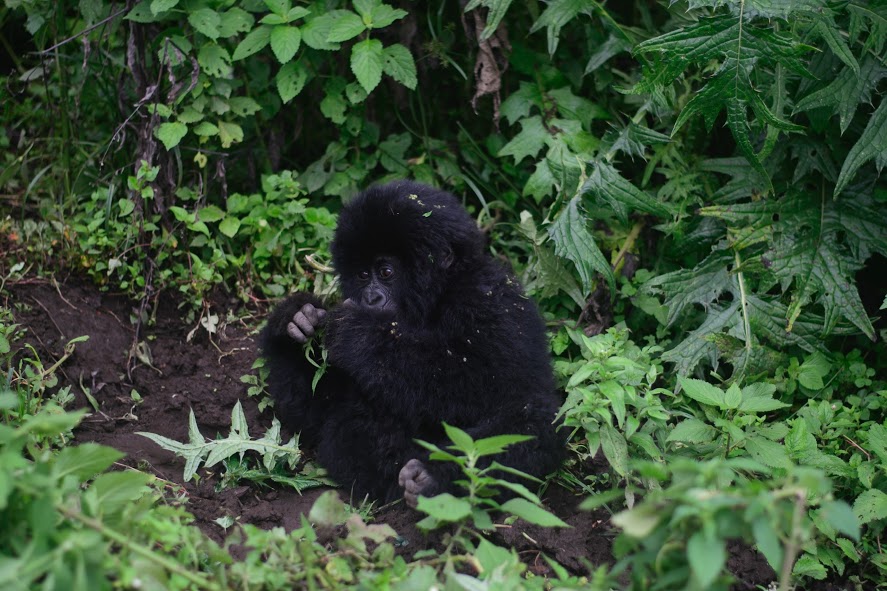
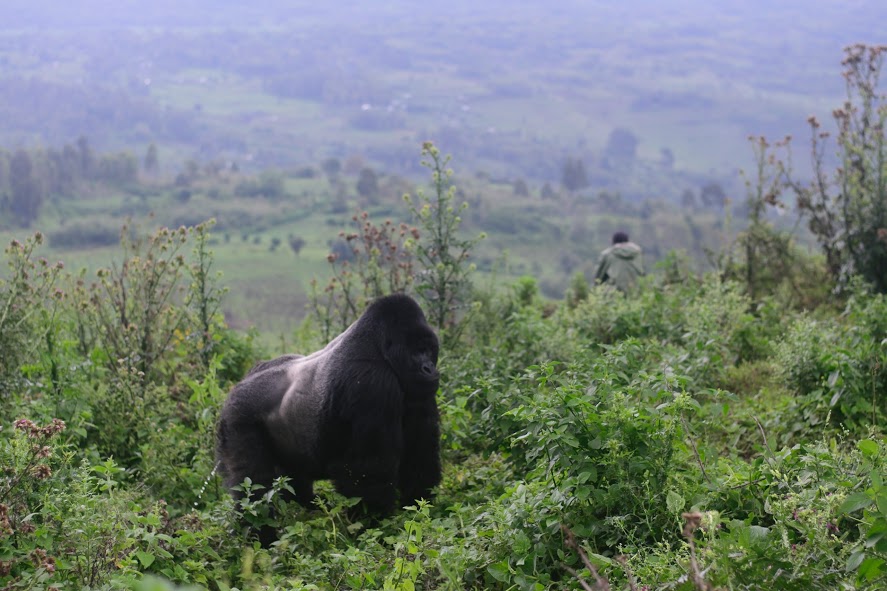
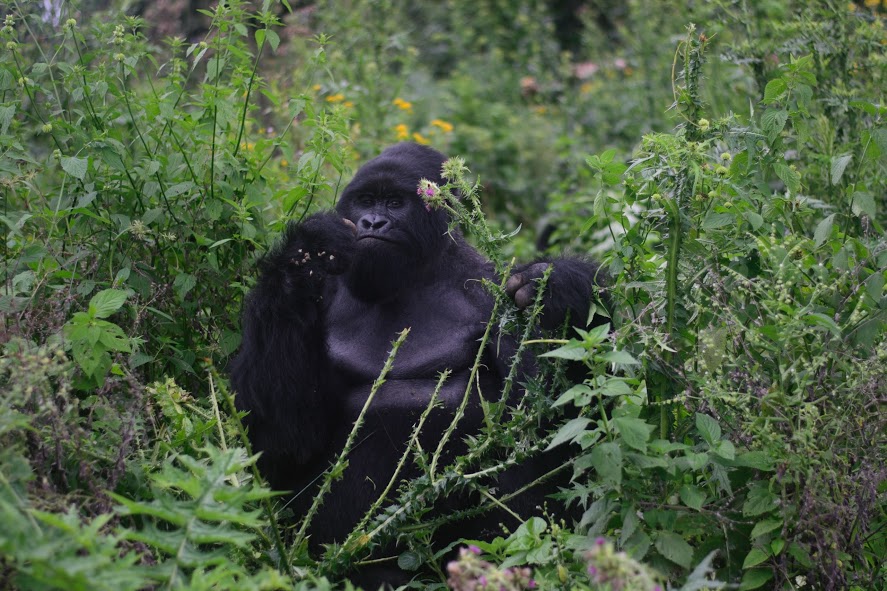
    A moment I’ll never forget – after an hour of walking through luscious, green farmlands and arriving at the top of a hill, our guide points in one direction. I look over and bam – there’s a silverback gorilla! I’m amazed, yet a bit nervous at how close I am. Observing this massive animal in his daily routine – stuffing his face with leaf after leaf – enthralls me. The ranger pulls out a machete and hacks away at a bush uncovering a mother and baby gorilla. A huge smile immediately covers my face. After the baby has had enough leaves, he starts walking my direction and passes over my feet. I stand completely still and turn my head back to the Silverback. I hope he isn’t upset that I’m so close to his family, but the Silverback is just chilling, making me realize I don’t’ have to be as nervous. Instead, I need to enjoy this unique wild animal experience.

    congo gorilla trek baby gorilla

    Gorilla trekking Rwanda vs. Uganda vs. the Democratic Republic of Congo 

    The top item on my to-do list before I stepped foot in East Africa was to go on a gorilla tour. Is gorilla trekking cheap? No way. Is it worth it? 100% yes – and I would do it again in a heartbeat! There are only 3 countries in the world where you can go mountain gorilla trekking: Rwanda, Uganda, and the Democratic Republic of the Congo. Each of these countries caters to a different type of traveler. So where did I decide to ball out and spend all my money to meet some Silverbacks? I chose the Democratic Republic of the Congo and encourage others to visit the Congo as well. There are pros and cons to each country. Take a look below at the logistics for each to make your decision.

    Rwanda Gorilla Trekking Logistics

    Traveler type: Time & comfort are more important than budget


    Location: Volcanoes National Park

    Days Needed: 1

    Permit Cost:  $1,500 USD; Discounted Permit: $1050 if visit other Rwanda national parks (Akagera and Nyungwe) for a minimum of 3 days between Nov – May. 

    1 Day Tour Cost (includes transport, lunch, permit, & guide) $1780 – $2000 USD per person 

    Visa Cost: 7-day transit visa: $30 USD; 3o-day tourist: $50 USD


    Rwanda is perfect for a traveler who has limited vacation, and wants to add gorilla trekking as a one-off experience before jetting back home. The Volcanoes National Park is only a 2-hour drive from Kigali airport, making a one-day gorilla tour possible. (You’ll just have to wake up super early at 4 am). Rwanda caters to a more polished gorilla trekking experience, since the country is clean and organized, has good infrastructure, and relatively good roads. The terrain during the trek is easier to hike when compared to Uganda. If you have more time in Rwanda and like to get off the beaten path, then I would recommend hiking the Congo Nile trail

    Pros: Easy access, easier hike, good infrastructure

    Con: The most expensive

    Travel like a Backpacker | How to save money and book a Rwanda Gorilla Trekking trip independently without a tour

    Step 1 – Get Gorilla Trek Permit: Contact the Rwanda Tourism Board to get your permits. Do this in advance – especially during high seasons (December – March, and June – September)! There are a limited amount of passes for each day. Their email is reservation@rwandatourism.com

    Step 2 – Organize Transport and Accommodation: You can either take public transport or hire a private driver to Volcanoes National Park.

    Hiring a Taxi: I recommend hiring a driver in Kigali. Even though it is slightly more expensive, it saves time and guarantees less stress. You leave at 4:30 in the morning, go gorilla trekking and come back to Kigali the same day. Hiring a driver with gas included costs ~$150-$250 USD.

    Local Bus Option: Taking local transport is the cheapest option, especially if traveling solo. You’ll need to take the bus from Kigali to Ruhengeri (1700-5000 RWF/$2- 6 USD), which takes 3 hours and runs every 30 minutes. (You can purchase tickets at the bus station).From Ruhengeri connect to Kinigi, which is 20-30 minutes away. The local bus costs 300-1500 RFW/$0.30-1.70 USD, and a mototaxi costs 2000 RFW/$2.70 USD to Kinigi. It is still necessary to have a 4WD for the gorilla trek the next day. Ask your hotel to organize transport, which should cost $80-$100. Your driver will drive you to the starting point and also wait until you finish trekking to bring you back.

    Accommodation: Budget Hotels in Kinigi range from $15- $80 a night. One recommendation is La Paillote Gorilla Camp Sit Campground. 

    Click here for current prices and details on La Paillote. 

    If you want to stay in Ruhengeri then The Amahoro Guesthouse ($30 per night) is a good option.

    Click for more details on Amahoro Guesthouse.

    Uganda Gorilla Trekking Logistics

    Interested in adding other safaris, has more time, and in decent physical shape


    Location: Bwindi National Park

    Days Needed: 3

    Permit Cost:  $700 USD 

    3 Day Tour costs (includes transport, food, accommodation, permit): $1600 USD

    Visa Cost: 7-day transit visa: $30 USD; 3o-day tourist: $50 USD


    Uganda is ideal for travelers who have more time flexibility, and want to go on additional safaris. It is possible to travel independently, but save yourself the burden and choose from the numerous gorilla tour operators who will organize permits, transport, and accommodation. Also, spending money on a tour helps the local economy. If you are on a budget, I recommend booking with Seith at Bwindi Backpacker Lodge. He is responsive to emails and offers a lower cost option for gorilla trekking. A bed costs $15 a night, and he can organize a taxi from Kabale for ~$100 plus fuel.

    It takes a full day (9 hours) to drive from the international airport to Bwindi National Park. I’d recommend extending your holiday in Uganda, staying for one or two weeks to see everything the country has to offer. Combine the gorilla trek with other popular attractions like canoeing in Lake Bunyonyi (which inspired Wakanda in the movie Black Panther), or a game drive in Queen Elizabeth National Park to see the tree climbing lions.

    For super gorilla fans, there is also a habituation trek, which is limited to 4 people per day and last 4 hours instead of 1 hour like the other gorilla tours. The permit cost is $1,500. A habituation trek differs because the goal is to get the wild animals used to the sight of people.

    Pros: Cheaper than Rwanda, Safer than the DRC

    Con: Harder trek, Park is far away

    (Short on time – here’s a tip: Check the option of flying into Kigali, Rwanda instead of Entebbe, Uganda. Bwindi is only 4 hours from Kigali, so the drive to the park is shorter, but there is an additional visa cost for Rwanda.)

    Interested in a Group Trip to Uganda?

    Join the Follow The Fro to Gorilla Trekking tour next February 2021!

    If you want to support a local Uganda tour agency and travel with Kesi and other adventurous souls, then sign up!

    Democratic Republic of Congo Gorilla Trekking Logistics

    Traveler Type: Budget-conscious, adventurous


    Location: Virunga National Park

    Days Needed: 2

    Permit Cost:  $400 USD or $200 USD during rainy season (Mar 15 – May 15)

    2 Day Tour costs (includes transport, accommodation, permit): $650 – $750 USD

    Visa Cost: 7-day visa: $105


    Pros: Cheapest option

    Con: Country is unstable, the park can close if there are safety concerns

    The Democratic Republic of Congo is perfect for an experienced traveler who likes to get off the beaten path and wants the cheapest gorilla trekking option. Since I did the gorilla trek in the DRC, I have the most information and will go in-depth about my experience in the section below. Visiting the gorillas in Congo is highly recommended. 

    Complete Guide to Gorilla Trekking in the Democratic Republic of Congo

    democratic republic of congo gorilla trek

    Why you should visit the Congo?

    Initially, two reasons convinced me to go gorilla trekking in the Congo:

    1. Hello! I’m a backpacker who is always looking to save money – it’s the cheapest place!

    2. I also wanted to hike the Mount Nyiragongo Volcano, so might as well kill two birds with one stone.

     After I completed the trek, there became even more reasons why the Congo is the best place to visit for a gorilla tour.

    3. Easy Booking Process: Virunga National Park is very organized, and all logistics can be booked directly with the park, without the need for a tour agency or middleman. There are options to apply for a visa and book gorilla permits, accommodation, and transport all on its website. I tend to be a last minute planner but recommend booking at least a month in advance, to ensure there is space. Also, visas can take up to 1-2 weeks to process.

    4.  John Paul aka The Best Guide Ever! The transportation and accommodation options on Virunga’s site were above my budget. I searched for a Couchsurfing host in Goma and was lucky to find John Paul. (Check out his Couchsurfing references here). Although he couldn’t host at his home, he went above and beyond to make sure that my friend and I were taken care of during our visit to the Democratic Republic of Congo. Before we even met JP, he was proactively helpful. We ordered our visas and gorilla permits online on our own, and he visited Virunga’s office on our behalf to ensure everything was running smoothly. Then he insisted on meeting us at the border to help guide us through Goma. The bus from Kigali took longer than expected and JP patiently waited over an hour for us at the border, and still greeted us with a warm smile and showed zero signs of annoyance. John Paul sorted a cheap hotel after asking for our price range and specifications (aka – must have Wi-Fi), and also arranged a cheaper taxi to the gorilla trek. Not only was he organized and supportive, but also was a fascinating person. Congo has an unstable history and having a local to talk to about the political climate, daily life, and what it means to be Congolese is precisely the reason I travel – to meet new people and hear their perspectives of life.

    John Paul makes his living by organizing tours in the DRC. I cannot recommend him enough! He will find you the best prices, and all the money you spend helps to support the local entrepreneurs in Goma, Congo. Check out my interview with John Paul in The Local Lingo section on my site.

    The moment you decide to visit the DRC contact John Paul on Facebook, or Whatsapp: +243 990 622 714

    5. Virunga National Park needs tourist money. The Congo gorilla tours and permit cost support Virunga National Park’s conservation efforts and makes a more significant impact in the Congo versus other gorilla trekking countries. Rangers risk their lives daily to protect the wildlife and nature from poachers and rebels. Unfortunately, ranger deaths are common (not in the same area where tourists go). There have been 170 rangers killed in the past 20 years – making this park the most dangerous conservation project. Tourism is low since people are afraid to visit the DRC. Our guide at the end of our trek told us if we felt safe and enjoyed our time then we should outreach and encourage others to visit the Congo. So here is my plea! Spend your money in the DRC! The mountain gorilla population has increased to 1,000, and to keep protecting these animals it’s important to support Virunga National Park financally.

    Wait…is the Congo safe?

    People are always shocked when I tell them I went to the Democratic Republic of the Congo. “Wait, isn’t the Congo very dangerous? Why would you go there?” Although I am well traveled, I too was a bit nervous about venturing to the Congo. I questioned if it was stupid to go to a country tormented by civil wars and distrust in the government. Yes – the Congo is a dangerous place, but Goma is generally safe for tourists, and Virunga National Park prioritizes keeping visitors protected. If there are ever any safety concerns, the park will close. When I researched the park, there had been no attacks against tourists in the past 20 years, so I was comfortable to go trekking.

    Unfortunately in May 2018, right after I visited Virunga National Park, two British tourists were kidnapped for 48 hours. They were unharmed and released safely. Virunga closed the park to tourists to reevaluate and establish robust measures to ensure the safety of the animals and visitors of the park. The park reoponed in February 2019, and I still encourage to visit Virunga.  

    silverback gorilla trek congo

    Transportation to Virunga National Park

    Start in Kigali, Rwanda: Kigali is the most accessible city to enter by either a flight or a bus. Kigali feels western, so it’s a comfortable place to spend the night. Spend at least a day in the city and visit the Genocide Memorial. This experience is somber, yet also a compelling one. The genocide is an essential time in recent history, which has also directly affected life in the DRC. BBC wrote an article about the domino effect of the genocide in the Congo.

    Kigali to Gisenyi, Rwanda – Border Crossing: There is a local minibus that frequently runs from Kigali to Gisenyi that takes ~3/4 hours. There are two border crossings: the Petite Barrière and the Grand Barrière. Even though the Grand Barrière is open until 10 pm, I would recommend leaving Kigali before 3 pm to have enough time to cross the border. Remember…this is Africa, transportation & logistics always take longer than expected.

    Goma: After crossing the border find a mototaxi to take you to your hotel in Goma. There are plenty of mototaxis by the border. I recommend spending the night in Goma since there is cheaper accommodation than in Virunga National Park.

    Goma to Bukima (Virunga National Park Gorilla Entrance): Find a private driver to Bukima. It is necessary to have a proper 4WD car because the roads are in bad condition. John Paul organized a driver for us for $120. It’s also possible to book transport through the Virunga website; it’ll just be more expensive – $188. I can’t recommend enough contacting John-Paul to organize your gorilla tour. He has the best prices and is trustworthy.

    Where to stay

    The night before the gorilla trek you can stay in Goma – the cheapest option, Virunga National Park – the more luxury option, or Bukima – the closest option.

    Click here to find the latest hotel prices and book a place to stay.

    La VersaillesBudget Room in Goma

    We told John Paul that we wanted the cheapest room, but also Wi-Fi and he recommended staying at La Versailles. A double room cost $30 per night and included breakfast. This accommodation is simple but easy to reach in Goma and good value. The price is higher on booking.com, so I’d recommend using John Paul to book. 

    Rated 3 out of 5 stars on TripAdvisor

    Lac Kivu LodgeFlashpacker Room in Goma

    Situated on the lake in Goma, Lac Kivu is a good option for a flashpacker who wants more comfort and a beautiful view, but not spend an excessive amount of money. Prices start at $80 USD for a room.

    Rated 4.5 out of 5 stars on TripAdvisor

    Mikeno LodgeLuxury Room in Rumangabo

    An expensive, high-end lodge with amazing scenery situated between the gorilla trek and volcano hike. It is an ideal location to stay the night between the two activities.

    Rated 5 out of 5 stars on TripAdvisor

    Bukima Tented CampGlamping right next to gorilla trek entrance

    Located within walking distance to the gorilla trek, this is a luxury option for individuals who like nature and want convenience. If you are lucky, maybe a gorilla will walk by during your stay.

    Rated 4.5 out of 5 stars on TripAdvisor

    What to pack

    Remember – you are hiking in the wild, so make sure to have the proper equipment to enjoy the experience fully. Here is a list of items I would recommend. You can find all of these suggested items on Amazon.

    • Hiking Boots – It is possible to trek in sneakers, but hiking boots are best especially if it rains. I was lucky, and my hike was not strenuous, but I was happy that I had hiking boots since some parts were muddy. Click here to review my favorite hiking boot.
    • Long Pants – Do not wear shorts, unless you like having weeds scratch you. Click here for travel pant suggestions.
    • Walking Stick (Optional) – I did not think a hiking stick was needed, but my friend Jordan bought one at the gorilla trek entrance for $5, and she was happy to have it.
    • Best Camera You Own – When else will you be this close to silverback gorillas. Be prepared and invest in a high-quality camera. I only travel with my smartphone, but luckily l was my friend Jordan who had a DSLR when I backpacked in Africa.  Click here for DSLR camera suggestions.
    • Poncho – Just in case it rains, especially if you are going during the rainy season
    • Selfie Stick – Who doesn’t want a gorilla selfie?! Here is the cheap selfie stick I use for my Pixel 2 phone
    • Water Bottle – I travel with the LifeStraw water bottle since it allows me to drink tap water anywhere. Click here for prices and more detail. 
    • Cash for tips – Make sure to tip your guide!

    What to pack for gorilla trekking?

    Click here to read an updated and comprehensive gorilla trekking packing list

    mother gorilla trek congo

    The Congo gorilla trek experience – What is the day like?

    6:15 AM – my alarm starts going off. I’m not usually an early riser, but today was easy to wake up because it was gorilla trekking day! At 6:30 AM John Paul arrived at our hotel and introduced us to his friend who would drive us to Bukima. Since I came to Goma late the previous night, I had no idea how it looked. I jumped in the back of the Jeep and felt a sense of adventure driving around the city. I kept thinking to myself, “Am I really in the DRC, right now?” Yes! Yes I was, and I felt completely safe. Looking out the window, I saw busy streets – boys were carrying heavy logs on human-made bikes, women dressed in bright patterns selling food in the market, and UN trucks driving around. I looked straight ahead, and we were headed towards the Mount Nyiragongo volcano, which was an unbelievable background view for a city. I had only been in the car for 5 minutes, yet was already blown away by Goma’s beauty!

    Our driver turned to me and asked, “Have you ever had an ‘African Massage’?” I have already been traveling for 1.5 months in East Africa, so I knew that question meant we were headed to streets filled with potholes. For 1-2 hours we endured a long, bumpy ride or “African Massage” to the gorilla trek entrance point. I still loved the experience though, because each time I looked out the window, the locals would be smiling and waving at me, especially the kids. Sharing smiles tend to put me in a good mood.

    When we arrived at Bukima around 8 am there was a diverse mix of 20ish people from Russia, Bangladesh, Australia, Canada, and the USA, all of whom were just as excited as us for the day. We checked in with our gorilla permits and sat down, waiting for the gorilla trek introduction. One of the rangers explained the logistics for the trek and described the different families in the park. We split into groups ranging from 4 to 6 tourists, 1 guide, and 2 additional rangers. My friend, Jordan, decided to buy a walking stick for $5 since it looked pretty cool. In hindsight, it wasn’t necessary since the trek was easy and only lasted an hour before we reached the gorilla family. (The other groups also said their treks were relatively easy and took 1 to 2 hours to find the gorillas). I already described my first interaction with the Congo gorillas at the beginning of this blog post, but I’ll reiterate that being so close to Silverback gorillas and their family is one of the top experiences I’ve ever had!

    The most surprising elements were:

    • How similar the primates looked to us – humans share 95-99% of the same DNA. During the gorilla tour, I felt like I was looking in a mirror (- ok, maybe I’m slightly prettier). To observe a wild animal and the physical similarities, like hands and thumbs, to humankind was “funnily surreal.”
    • The gorillas’ behaviors were similar to humans. At one point it started to rain, and the mother immediately picked up her baby and walked into a more covered area. Well, Miss mother gorilla – I feel you, I also don’t like to get my hair wet!
    • How much the gorillas farted! Seriously every 5 minutes I’d hear a release of gas.

    silverback gorilla farting

    Gorilla trekking during rainy season

    Should you do a gorilla trek in the Congo during the rainy season? Since I am a backpacker that means I have a tight budget, so when I saw the gorilla permits were half the price – $200 – between March 15 to May 15, I knew that was the time I wanted to go. Although it was the rainy season, we got lucky and experienced no rain during the gorilla trek. It also didn’t rain at all the next day during the Nyiragongo volcano trek. It rained at nights while we were there, but the weather did not impact our journey. I don’t think rain would hinder the experience (i.e., you will still find the gorillas), but it would be an annoyance. Don’t let rainy season stop you, just be prepared with proper footwear, a poncho, and an umbrella to hide under to take photos.

    virguna national park congo

    Things i wish i knew before

    • Do not fly out of the Goma – The airport is small, and they try to get additional money out of Westerners. Most people choose to fly out of Kigali, but since I used airline miles, I decided to fly out of Goma. When I arrived at the airport, I was surprised that I needed to pay an additional $50 departure tax in cash. The airport staff also wanted to charge me for extra shots, even though I had my yellow fever vaccine card. I assured them that since I am from the US, I already had all the necessary vaccinations and did not need them to stick any needles in me! I could tell they thought they could take advantage of me.
    • Use John Paul as soon as you decide to visit the Congo. Seriously, he will organize everything for you and make you feel comfortable in a country that has many negative associations.
    • An East African Visa is voided once you enter the Congo.
    • To cross the border, you need to show your yellow fever vaccine card.
    • Spend more time in Goma. I only planned to stay in Goma for two nights for the gorilla trek and volcano hike, but I would’ve loved an extra day or two to explore Goma, and kayak on the lake.
    • I wish I were more knowledgeable about Congo’s complicated history. Then I would have had more enlightening conversations with the locals. I highly recommend watching the movie This is Congo, an unfiltered documentary that follows the life of 4 Congolese affected by the ongoing conflicts.

    Gorilla Trekking Congo? Just do it! Here’s a video from my experience.

    Pin this post to reference later!

    As an Amazon Associate I earn from qualifying purchases.

    A Day Visiting Semuc Champey

    A Day Visiting Semuc Champey

    My current setting – rocking back and forth on a hammock, disconnected from the outside world, listening to rain pouring down. I just finished a fun filled day at Semuc Champey in Guatemala. I arrived at El Muro hostel in Lanquin after an 8 hour bus ride from Antigua. When I got to my hostel I was greeted by a free welcome shot. Soon after I realized there were only two other people staying at El Muro, but we ended up having a fun night with jenga, cuba libres, and laughs. Usually El Muro is a party hostel, but I was definitely a fan of this laid-back vibe.

    IMG_4302


    Why Visit Semuc Champey?

    Semuc Champey is a natural monument famed for its limestone bridge and turquoise pools. Although Semuc Champey is in the middle of nowhere Guatemala, it’s worth visiting. I decided to book a tour, which included caving, tubing, and entrance into the pools.

    1. Caving

    Caving in Semuc Champey

    We started the day with caving. Although slightly unsafe, it was a fun, little adventure to explore a dark cave . We each took a candle and then walked, swam, jumped, and climbed our way through. I left the cave with a couple of scrapes from slamming my knees into rocks, but I would totally do it again.

    2. Lunch

    Lunch at semuc champey

    After caving we went tubing and then had lunch. For lunch there was a cheap buffet ($3-$4) cooked by some locals, which was quite yummy. There is also a family that will sell you cheap beer ($2)

    3. Semuc Champey

    We ended the day exploring the pools. First we hiked up to the viewpoint, and then we relaxed for an hour or two in the pools. Semuc Champey is relaxing and has beautiful scenery. As a solo traveler I would recommend going with a tour, so that you have friends to explore for the day. Also going to Semuc Champey during off season is great, because there was no one else at the pools.

    Pin It on Pinterest